


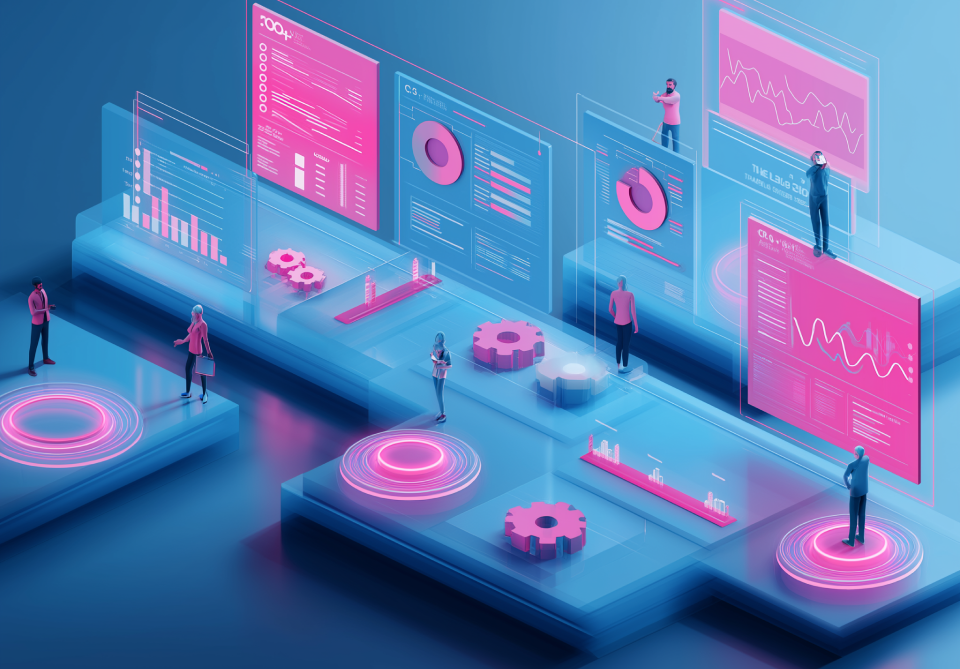




A pricing engine is software that determines the price of specific items based on specified criteria. It is used by businesses to automatically determine the best product or service prices depending on various conditions. This system aims to help companies maximize their profits through price optimization.
What is a Pricing Engine?
A pricing engine is the computational system that determines the final price for products or services based on predefined rules, configurations, and business logic. Think of it as the brain behind every quote, translating complex pricing strategies, discount policies, volume tiers, and contractual terms into accurate, consistent quotes that protect margins while remaining competitive.
At its foundation, a pricing engine operates through a structured decision framework. When a sales rep begins configuring a quote, the engine processes multiple variables simultaneously: base product pricing, quantity-based discounts, customer-specific contract terms, regional pricing variations, promotional offers, and approval thresholds. Each of these elements feeds into a calculation that must happen instantly while maintaining complete accuracy.
Pricing engines are applied across a wide range of industries to optimize pricing strategies and improve profitability:
- Ecommerce: Online retailers use pricing engines to automatically adjust product prices based on demand, competition, and other market factors. This ensures customers always receive competitive pricing while helping businesses maximize sales and profit margins.
- Retail: In brick-and-mortar and omnichannel retail environments, pricing engines help maintain consistent, competitive pricing across all product categories. They enable dynamic price optimization, ensuring each item is priced to balance profitability with customer-perceived value.
- Hospitality and Tourism: Hotels, airlines, restaurants, and travel companies use pricing engines to set real-time rates for rooms, flights, meals, and other services. These tools analyze demand patterns, booking trends, and customer segments to adapt prices and optimize occupancy and revenue.
- Software-as-a-Service (SaaS): SaaS providers leverage pricing engines to manage subscription tiers, usage-based pricing, and promotional discounts. This allows them to tailor pricing models to customer needs while ensuring profitability and long-term growth.
Pricing engines have become essential for businesses aiming to remain competitive in dynamic markets. Automating complex pricing decisions enables companies to optimize margins, better manage inventory, and deliver consistent value to customers.
Synonyms
- Price Engine
- Dynamic Pricing Engine
- Real-Time Pricing Engine
- Pricing Management Software
- Pricing Rules Engine
- Pricing Engine Software
How Pricing Engines Automate Pricing
Traditional pricing engines function as rule-based systems. They apply predetermined logic: if a customer orders 100 licenses, apply a 15% discount; if the deal exceeds $50,000, route to VP approval; if the customer is in the EMEA region, adjust pricing for currency and local tax regulations. These rules create guardrails that ensure every quote aligns with company policy, regardless of who generates it.
Modern pricing engines have evolved beyond simple calculation tools. They are embedded in Configure-Price-Quote (CPQ) platforms and integrate with CRM systems, ERP software, and contract management tools, creating a unified logic layer in which pricing decisions flow seamlessly across the entire revenue architecture. This integration eliminates manual re-entry and version-control issues that plague organizations that still rely on spreadsheets or disconnected systems.
There are two main types of pricing engines: rule-based and AI-driven.
- Rule-based pricing engines rely on predefined formulas and business logic to set prices according to established criteria, such as cost-plus margins, competitor benchmarks, or discount thresholds. They ensure consistency and control, making them ideal for predictable or regulated pricing environments.
- AI-driven pricing engines use predictive analytics and machine learning to analyze vast amounts of real-time data, including demand fluctuations, competitor activity, and customer behavior patterns. These systems continuously learn and adapt, enabling businesses to dynamically identify the optimal price for each item or segment.
Leveraging automation through either approach, or a combination of both, ensures companies can respond rapidly to market changes, maintain competitive pricing, and maximize profitability.
The Benefits of Using a Pricing Engine
Businesses that deploy a pricing engine, especially in B2B and e-commerce contexts, can capture significant value by automating and optimizing their pricing strategy. Below are key benefits:
Centralized Pricing & Data Management
Pricing data typically originates from disparate sources—competitor monitoring, customer feedback, market trends, multiple sales channels (website, mobile apps, third-party retailers), and internal cost systems. A pricing engine consolidates these inputs into a single system of record. With this unified data infrastructure, companies can apply consistent pricing logic, maintain accurate price lists, and ensure that pricing decisions reflect real-time inputs rather than manual guesswork.
Enhanced Customer Experience
A competitive, transparent price is a strong element of customer trust. By using a pricing engine, businesses can set prices that align with market conditions and customer segments, helping avoid underpricing (which can erode margin) and overpricing (which can drive churn). In turn, better-aligned pricing supports value perception and customer loyalty.
Improved Pricing and Quote Accuracy
Complex offerings, such as multi-tier subscriptions, configurable services, and regionally differentiated pricing, can lead to manual errors and inconsistencies. A pricing engine automates rule-based calculations (accounting for discounts, bundling, special charges, cost plus margins, segment adjustments), ensuring that every quote reflects accurate and defensible pricing, thereby reducing lost sales and margin erosion.
Streamlined Sales and Channel Experience
When pricing is automated, sales and channel teams operate with confidence. A consistent pricing strategy across all channels (direct, partner, online) speeds up quote generation and ordering, reduces internal friction, and frees teams to focus on customer value rather than manual pricing spreadsheets. Plus, AI-enabled pricing engines help accelerate response time to market shifts (inventory changes, competitor moves, demand spikes).
Advanced Analytics and Reporting
Beyond simply setting a price, pricing engines provide dashboards and insights into pricing performance: margin trends, discount patterns, segment elasticity, competitor actions, inventory impact, and anomalous pricing behavior. These analytics support the continuous improvement of an organization’s pricing strategy.
Profit Uplift and Revenue Optimization
Perhaps the most compelling statistic: a landmark study published in Harvard Business Review found that for an average firm, a 1% improvement in price—assuming no loss in volume—translates into an 11.1% increase in operating profit. A recent comparative analysis similarly reports that retailers deploying AI-powered pricing solutions achieved gross profit uplifts of 5% to 10%.
Features of Pricing Engines
Pricing engines come with a variety of features that make them powerful tools for businesses.
These features include:
- The ability to create rules-based pricing and discounts: Pricing engines allow businesses to create rules-based discounts and price lists. This ensures that customers are given the correct prices for each item, no matter where they shop or request a quote.
- Data syncing across multiple channels: Pricing engines can sync pricing data across multiple selling platforms in real-time, so businesses don’t have to manually update prices each time the market changes.
- Price comparison visibility: A pricing platform that ties complex calculations to customer segmentation allows businesses to offer discounts and pricing models tailored to each customer or group, helping companies deliver competitive pricing.
- Advanced analytics: Pricing engines have built-in analytics capabilities, so businesses can track customer behavior trends, identify pricing anomalies, and more.
The Pricing Engine’s Role in CPQ
A pricing engine plays a critical role in Configure, Price, Quote (CPQ) software, serving as the core mechanism that calculates accurate, optimized prices during the quoting process. In modern sales environments, especially those involving complex product configurations, subscription models, and multiple discount rules, the pricing engine ensures every quote reflects real-time data and approved pricing logic.
Within a CPQ system, the pricing engine automates several key functions:
- Dynamic Price Calculation: It evaluates all relevant variables, such as product configurations, volume tiers, customer segments, and contractual terms, to calculate accurate prices instantly. This eliminates the need for manual lookups or spreadsheets, reducing quote turnaround time.
- Rule Enforcement and Compliance: The pricing engine automatically applies company pricing rules, discount thresholds, and approval workflows. This ensures that every quote aligns with corporate pricing policies and profitability goals, minimizing errors and unauthorized discounts.
- Integration with CRM and ERP Systems: It connects with customer relationship management (CRM) and enterprise resource planning (ERP) platforms to access real-time cost, inventory, and customer data. This enables consistent, data-driven pricing across all sales channels.
- AI-Driven Optimization: Advanced CPQ platforms leverage AI-enabled pricing engines to analyze historical sales data, customer buying behavior, and market trends. This allows sales teams to generate competitive yet profitable quotes, improving both close rates and margins.
Ultimately, the pricing engine serves as the intelligence layer within CPQ, transforming raw data into actionable pricing decisions. It empowers sales teams to deliver fast, accurate, and personalized quotes that enhance customer trust and accelerate the sales cycle, while ensuring every deal supports the company’s revenue and margin objectives.
People Also Ask
What is a real-time pricing engine?
A real-time pricing engine is a software tool that helps businesses automatically calculate prices and discounts in real-time. It enables businesses to create a rules-based pricing strategy, giving customers the correct prices for items or services.
What is the difference between a pricing engine and a dynamic pricing engine?
A pricing engine is a software tool that helps businesses set and manage prices based on predefined rules, costs, and market data. It automates price calculations and ensures products or services are priced strategically, often using fixed or semi-flexible pricing models.
A dynamic pricing engine, on the other hand, continuously adjusts prices in real time based on changing market conditions, competitor pricing, demand fluctuations, inventory levels, and customer behavior. Dynamic pricing engines are more adaptive, allowing businesses to respond instantly to market trends and optimize revenue more aggressively.