
















One Source of Truth.
Finance and CRO Aligned.
Revenue That Closes Clean.
Compliant Recognition. Live Revenue Data.
One Governed Record.
The numbers are right before anyone checks them.
Finance and revenue leadership aligned on one record.
The numbers finance and revenue leadership can both stand behind.
Enterprise Security Compliance
Frequently Asked Questions
Want to know more?
Automated revenue recognition means the recognition schedule is a structural output of your subscription and billing data, not a spreadsheet maintained manually. When a contract changes, the recognition schedule updates automatically. When an invoice posts, the recognition entry follows. Finance does not chase the change. The system already made it.
DealHub supports over-time amortization, point-in-time recognition, and event-based recognition at the subscription line level. Each priced item follows its own recognition methodology. The audit trail is built into the data model. Finance does not assemble it separately for auditors.
When a subscription is amended or renewed, the recognition schedule updates automatically. Finance does not manually recalculate recognized revenue or adjust deferred balances. The updated recognition reflects the new contract terms from the effective date of the amendment.
Deferred revenue balances are tracked at the subscription and line-item level as a live output of the billing and recognition data. Finance has a real-time view of what has been billed but not yet earned, without a separate deferred revenue schedule to maintain or reconcile against billing.
The period close runs in two steps. Initiate Close locks the period and opens a review window where finance verifies entries and can abandon if corrections are needed. Close Period finalizes the period and prepares journal entries for ERP sync. Nothing becomes permanent until finance confirms it is correct.
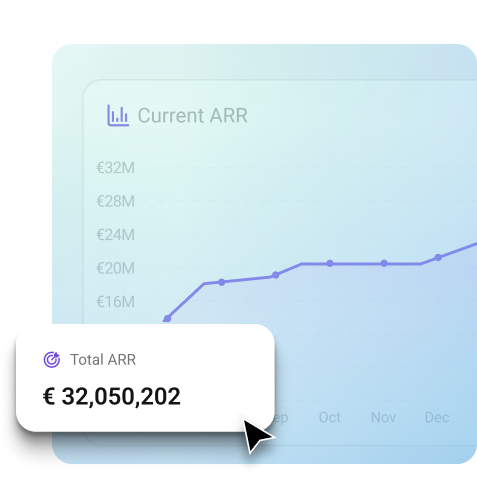
The gap comes from pulling data from different systems, billing vs. CRM, that are never fully in sync. DealHub calculates ARR and MRR directly from the governed subscription and billing record. Both finance and revenue leadership pull from the same source, with the same calculation methodology. The number matches because the system is the same.
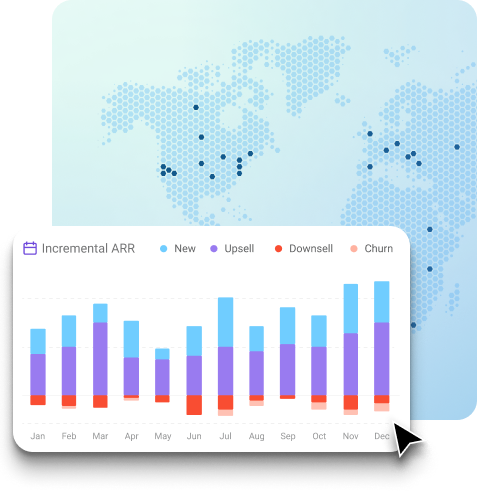
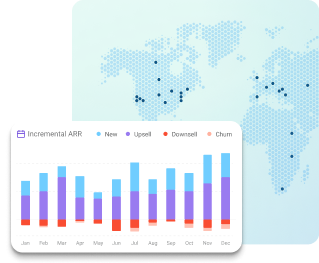
DealHub calculates ARR, MRR, Net Revenue Retention, Gross Revenue Retention, expansion revenue, contraction revenue, churn, and deferred revenue, all from subscription and billing data. Waterfall reporting shows period-over-period movement as a structured breakdown. Cohort analysis groups revenue by close date, product, or segment using actual billing events.
Revenue recognition data exports as structured journal entries and syncs to your ERP general ledger. Finance does not manually translate recognition schedules into accounting entries.