

Properly managing complex business processes and a growing workforce is a key role of HR and finance managers, and doing so with ease is crucial to the success of your organization. Effective workforce management software will help you onboard new employees, manage employee scheduling, oversee tasks and projects, and accurately manage payroll. At its best, this type of software will automate complex or repetitive tasks so your team can work as efficiently as possible.
Good workforce management (WFM) not only streamlines the day-to-day operations of management, but also improves employee productivity, engagement and workplace satisfaction. For you to ensure employees are performing at their best, it’s important to invest in tools and technologies that simplify complex work and automate time-consuming tasks.
Given the abundance of workforce management software available on the market today, it can be difficult to find and choose the best solution for your company.
Here, we dive into 15 of the best workforce management software products, including which industry they’re best suited for and key features and capabilities, so you can determine the best fit for your business needs. Note that this list is in alphabetical order and does not reflect any other sort of ranking.
What is workforce management software?
Workforce management (WFM) software is a tool that helps you plan, track, and optimize how your employees work. Most WFM platforms combine scheduling, timekeeping, attendance, and analytics in one system, so you don’t have to rely on five different tools to manage your workforce.
At its core, WFM software solves three big challenges:
- Scheduling: Who’s working when? Are you meeting demand without overspending on labor?
- Time tracking: Are people clocking in accurately? Are you staying compliant with labor laws?
- Productivity: Are your teams hitting goals, or are inefficiencies slowing you down?
Whether your employees are in the office, in a remote location, or out in the field (e.g., in manufacturing or construction), you can use workforce management software to support, automate and digitize the day-to-day tasks typically performed by HR managers or department managers.
Here are some of the key features and functionalities you might look for in workforce management software:
- Time and attendance tracking
- Schedule management
- Project management and daily task management
- Communication and collaboration capabilities
- Employee onboarding capabilities
- HR data collection and reporting
- Payroll and benefits management
- State and federal wage and insurance compliance
- A mobile app
Some also include advanced features like AI-based forecasting, mobile shift management, payroll integrations, and performance monitoring.
Benefits of workforce management software
Workforce management (WFM) software helps you take control of your team’s time, schedules, and productivity.
Instead of juggling spreadsheets or chasing down shift swaps, you get a centralized platform that does it all — from forecasting demand to tracking attendance.
Here’s what that means for you:
- Fewer errors. Automate scheduling, reduce compliance risks, and stop paying for unnecessary overtime.
- More visibility. See who’s working, where, and when in real time.
- Higher productivity. Match labor to demand so you’re never understaffed or overstaffed.
- Happier employees. Empower your team with mobile access to schedules, shift bids, and time-off requests.
- Smarter decisions. Use real-time data to optimize staffing, improve forecasting, and cut costs.
Whether you’re managing a distributed team or a single location, WFM software gives you the tools to run leaner and smarter, without the headaches.
1. ADP

ADP is a powerful platform that assists HR managers with payroll, recruitment and talent management, time tracking, reporting, and analytics. With ADP, administrators can easily schedule employees and track their hours. HR managers can maintain employee contracts, COBRA, and benefit administration – ADP is HIPAA compliant as well. ADP offers mobile access for employees that are not regularly behind a desk and provides top-notch support with live 24/7 support via phone and chat.
Best for: Mid-to large-sized businesses (50+ employees) that need an all-in-one HR and payroll platform.
2. Anaplan

With Anaplan, HR managers can strategize talent and recruiting operations, optimize workforce planning and management, and maintain compensation documentation and plans. Anaplan provides real-time visibility into your workforce to ensure accurate labor forecasting. Digital collaboration features allow employees to connect and work together so they can accelerate the speed of business decisions. Detailed reporting and analytics provide managers with the ability to close skill gaps, forecast hiring costs, and collect relevant data on employee productivity and performance. Anaplan offers live 24/7 support and reps are also available via chat.
Best for: Large enterprises looking for a platform that connects and manages business data from HR, finance, operations, and third-party sources, in addition to workforce planning.
3. Asure
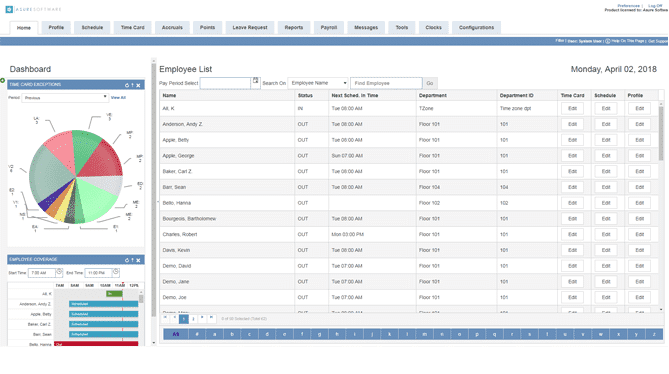
With Asure, HR managers can simplify applicant tracking, digitize employee onboarding, automate benefits enrollment, and streamline payroll and tax processes. Additionally, managers can effortlessly track employee time and attendance, scheduling, and oversee workflows and projects.
Best for: Scaling companies that want to eliminate IT complications and costs that stem from payroll.
4. Bamboo HR

Bamboo HR can store employee records and streamline workflows and managerial approvals. With mobile access, even employees who are out in the field or not seated behind a desk have the tools and technology to perform their tasks. HR managers can improve the hiring process with applicant tracking and customized onboarding and offboarding. Bamboo HR also offers time tracking, PTO, and payroll management. Lastly, they supply phone and chat support to their customers.
Best for: Small to medium-sized businesses who want to improve company culture and employee satisfaction.
5. Ceridian Dayforce

Ceridian Dayforce is a full-fledged human capital management (HCM) platform that helps organizations automate daily operational processes to quickly create employee schedules, review timesheets, and payroll approvals. With this software solution, you can reduce labor costs and ensure managers are sticking to approved company budgets and guidelines. Easily track employee productivity with task management and generate accurate labor forecasts based on data and reporting. They also provide mobile access for frontline and deskless employees and are available by phone for live rep support 24/7 or by chat.
Best for: Mid-to large-sized companies (350-10,000 employees) that have complex HR, global payroll, compliance, and workforce management needs.
6. Gusto

Gusto makes it easier to hire and onboard new employees, track time and attendance, and manage payroll and benefits. Gusto’s all-in-one workforce management solution provides employees with features that improve productivity and allow managers to automate feedback requests and performance tools. In addition, Gusto integrates with Zoom, Slack, QuickBooks, and more to further streamline daily processes.
Best for: Small businesses and contractor-driven orgs looking for ease-of-use, customizability, and mobile access.
7. HiBob
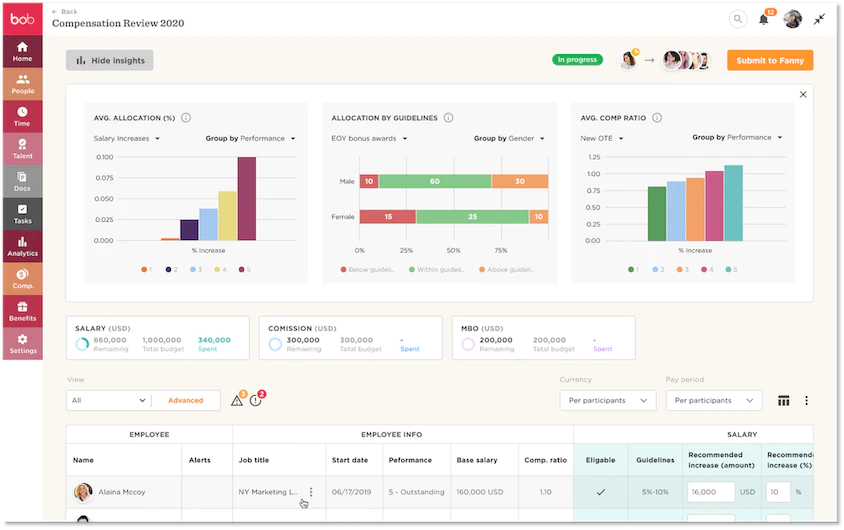
Bob makes it simple and efficient for HR managers to automate daily manual processes like employee form completion, approval cycles, and onboarding. With Bob, users can digitize employee time and attendance management, send completely customizable and automated workflows and approvals, and generate insight reports to ensure managers are following best practices and employees are as productive as possible. They integrate with several other recruiting and applicant tracking softwares as well.
Best for: HR managers with fast-growing and dynamic global workforces who want to boost culture and employee engagement.
8. NICE

NICE CXone WFM uses artificial intelligence to reduce and accurately forecast labor costs and to optimize your workforce and talent. Automate schedule creation, workflows, and time and attendance management. NICE offers users greater oversight and visibility of their workforce and provides employees with mobile access for self-scheduling and improved collaboration and communication.
Best for: Contact centers and agents that need a combined solution for WFM and customer service automation.
9. Tanda

Tanda is an Australian-based company that enables users to create rosters and track employee attendance. HR managers can streamline employee onboarding and track the status of every new employee through the process. A GPS-powered time clock, guarantees employees are clocking-in in the right place at the right time. Reduce the amount of time it takes to accurately calculate payroll and benefit compliance with automated payroll and compliance capabilities that handle the complexity of Australian payroll requirements.
Best for: Tanda is a preferred solution for Australian-based companies because it makes it easy to navigate complex labor laws and payment regulations.
10. Teamwork

Teamwork is for companies that work with teams, freelancers, or remote workers. This software makes it simple to manage different projects and clients. Admins can easily assign employees projects and tasks, and track task progress to ensure you’re meeting goals and deadlines. Teamwork helps HR managers by providing ready-made onboarding checklist templates to deliver a more effective onboarding experience. In addition, Teamwork integrates with other collaboration tools such as Slack, Xero, Hubspot, Google Drive, and more.
Best for: Teams that primarily handle client work, like agencies, consulting firms, and professional services businesses.
11. UKG

UKG is an award-winning software that provides an all-in-one employee time tracking, project management, and HR solution to businesses all around the globe. From a digital employee handbook to tax compliance, UKG offers several features and capabilities that reduce administrative tasks and increase employee productivity. They also offer a workforce management app that can be accessed by employees from any Android or iPhone.
Best for: Mid-to large-sized organizations and enterprises that employ a global workforce. They also offer a self-service employee portal that gives employees access to their wages directly on their mobile phones at any time of day.
12. When I Work

When I Work’s automated employee scheduling, time tracking, and workforce communication software saves HR managers and team leaders valuable time. Managers can easily onboard employees, approve PTO, review and approve shift swapping and more. In-shift attachments let employees know what tasks need to be completed when clocking in. When I Work provides administrators with real-time oversight of projects and helps teams collaborate more efficiently.
Best for: Small to large businesses with shift-work employees.
13. Workday

Workday is a software platform that optimizes day-to-day manual processes and automates nearly every HR task. Administrators can easily manage scheduling and labor costs, time and attendance, absences, and payroll. Gain real-time employee insights into engagement, productivity, and more. No matter where your employees are, they always have access to the software via a desktop or mobile phone.
Best for: Mid-sized to large enterprises that need a centralized platform for HR (including workforce planning) and financial management.
14. greytHR
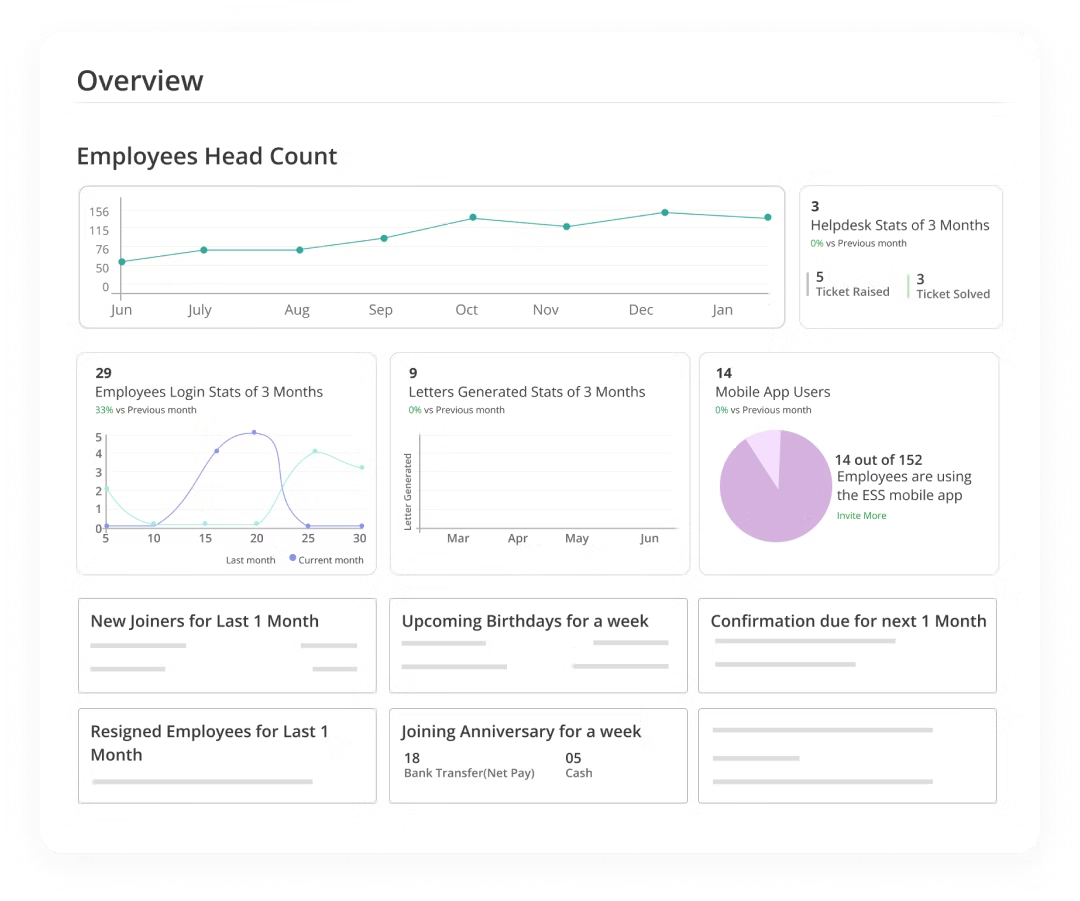
greytHR helps HR administrators manage employees throughout their entire lifecycle. Efficiently manage payroll to ensure accuracy and compliance, properly manage employee attendance and leave, and store all employee records and information digitally.
Best for: SMBs that need software to handle payroll, attendance, leave tracking, and new hire onboarding.
15. OnPay
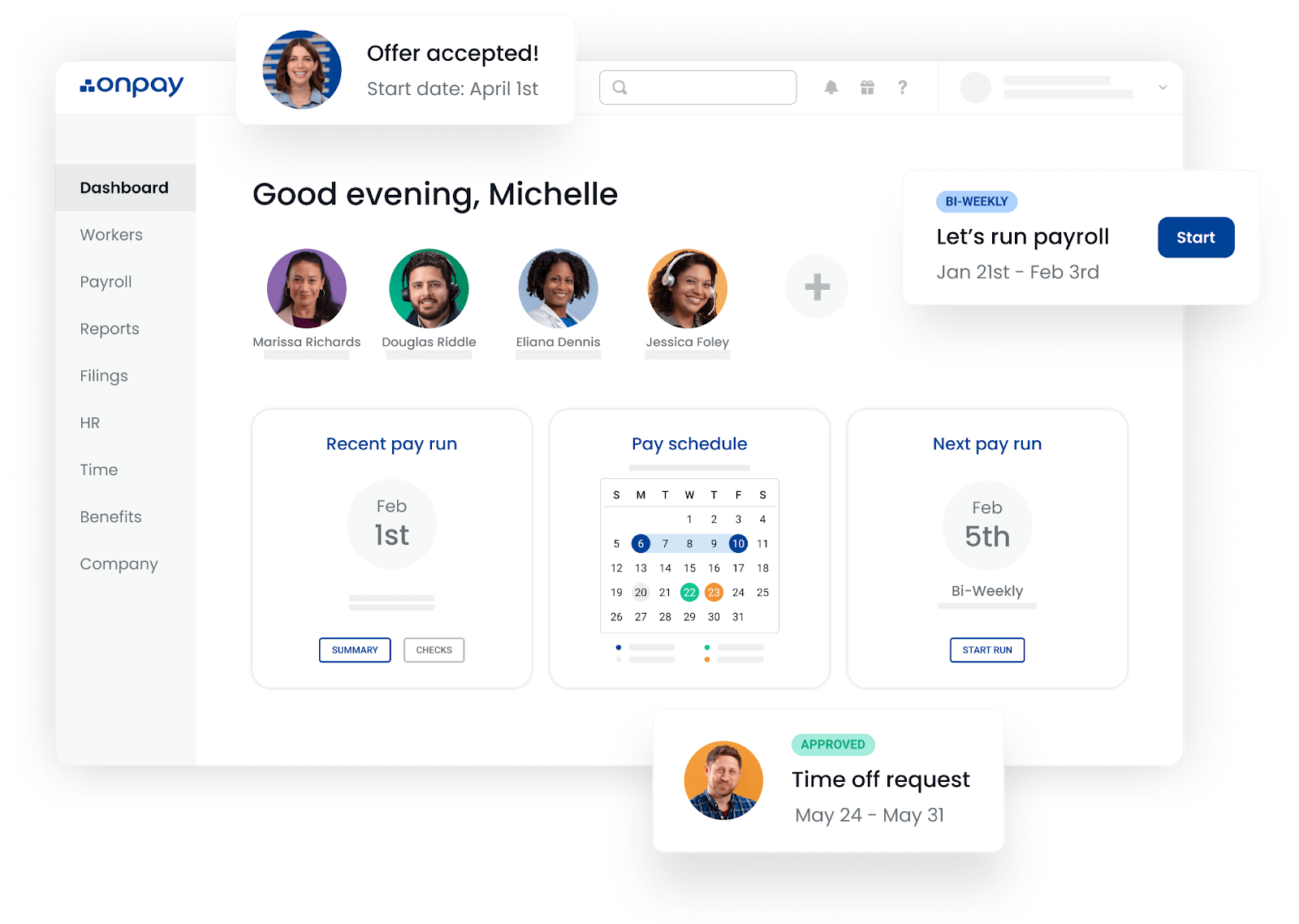
OnPay is an all-in-one HR management solution that helps businesses stay compliant. It gives businesses everything they need to navigate payroll and benefits, and it’s designed to be accurate in all industries. With Onpay, companies can meet every challenge they come across.
Best For: Small and mid-sized businesses (sub-500 employees) in industries with unique payroll needs, like healthcare, restaurants, agricultural businesses, and nonprofits.
Commonly asked questions about workforce management software
1. Why is workforce management important?
Workforce management is important because it increases employee productivity, provides managers with comprehensive oversight of their employees in real-time, and automates time-consuming manual processes. In some cases, it will also facilitate greater employee engagement with collaboration and communication tools.
2. What should I look for in a workforce management tool?
Some features and capabilities that shouldn’t be overlooked when choosing a solution include employee onboarding and training tools, time tracking and attendance management, and a payroll solution or integration. If most of your workforce is deskless, then it’s important to choose a WFM solution that also provides mobile access.
3. How do I choose workforce management software?
A key factor here is the industry and size of your business. We recommend doing your research and comparing solutions on peer-based review sites such as G2 or Capterra to help determine which software solution fits your business needs. Once you’ve found a solution that could work for you, be sure to speak to a representative and request a live demo of the product.
How the DealHub platform supports workforce management
DealHub helps sales and revenue leaders manage and empower their teams so they’re able to work more effectively and efficiently, and achieve greater job satisfaction and work-life balance.
In particular, DealHub enables sales organizations to increase revenue and automate sales processes with the help of Configure Price Quote software, contract management, subscription management, and a digital DealRoom.
Here are some of the ways DealHub helps companies create frictionless work processes:
- Create a single source of truth for all employees by automatically syncing customer and pricing data with your CRM.
- Sales reps can generate accurate price quotes in minutes, without any need for additional coding.
- Improve digital collaboration between buyers and sellers in a single location with a DealRoom.
- Accelerate contract negotiations with automatic document generation and online redlining.
- Reduce administrative oversight with a guided selling playbook, pricing guardrails, and automated workflow approvals.
- Improve employee satisfaction and improve employee retention rates by providing the tools they need to work effectively and eliminate repetitive, time-consuming manual tasks.
DealHub enables a frictionless work process for sales teams.
Want to learn how?
Talk to us