AI is everywhere, from the way we search for answers to how we write emails.
But according to DealHub’s Chief Product Officer and Co-founder, Eyal Orgil, these everyday uses barely scratch the surface of what AI can do for revenue teams.
At INBOUND 2025, he revealed how AI is poised to transform quoting, pricing, contracts, and buyer engagement — and why the companies that prepare now will lead the next wave of growth.
His message was clear: AI isn’t just about speed and scale. It’s about creating smarter, more predictable revenue processes.

AI just for the sake of AI is not the value. We need to understand what pains it can solve and how ready our processes are to leverage it.”
The AI paradox: potential vs. reality
Eyal kicked off his session by comparing AI expectations with reality. While many organizations dream of automation, personalized buyer experiences, and risk reduction, the truth is more complicated.
According to an MIT study, 95% of AI projects fail to deliver business value. The problem isn’t the technology; it’s the lack of governance and readiness. Too many companies try to “plug in” AI without fixing broken GTM processes first.
AI dropped into a broken process doesn’t create efficiency — it creates chaos.”
Before you can scale with AI, you need:
- Clear revenue goals and success metrics
- Structured, AI-ready workflows
- Reliable, accurate data
- Governance for compliance and risk management
- Teams trained to work alongside AI
Why quote-to-revenue is AI’s next frontier
Most companies already use AI for marketing tasks like email generation or research, but the real untapped opportunity is in the quote-to-revenue cycle — the heart of every deal. This is where bottlenecks, manual handoffs, and a lack of visibility often slow down growth.
Eyal highlighted four critical areas ripe for AI transformation:
- Quoting: Building complex, customized quotes in real time
- Pricing: Applying rules that protect margins while optimizing for close rates
- Contracts: Generating compliant, buyer-ready documents automatically
- Buyer Experiences: Delivering self-service and personalized engagement
AI has the power to streamline every stage of this lifecycle, from the moment a deal is configured to the moment revenue is recognized.
Humans + AI: a smarter way to sell
Eyal shared his vision of humans and AI working together. Rather than replacing sales teams, AI acts as a co-pilot, automating repetitive tasks, surfacing insights, and enabling salespeople to focus on strategy and relationships.
Building toward this vision, some of the innovations DealHub is exploring include:
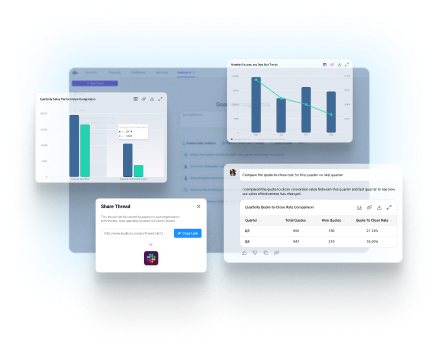
- Conversational quoting: Sales reps can build quotes by simply talking to an AI assistant, just like interacting with ChatGPT.
- Real-time pricing optimization: AI analyzes historical deal data to recommend the best pricing strategies.
- AI-powered buyer assistance: Buyers can self-serve, update quotes, or explore case studies without waiting for a salesperson.
- Risk detection in contracts: AI flags compliance issues and risky clauses before deals close.
Beyond speeding up the sales process, these capabilities reduce risk, increase accuracy, and create a more seamless experience for both sellers and buyers.
Laying the foundation for AI success
The road to AI value is not direct. Successfully implementing AI requires a bridge between business needs and AI capabilities. That bridge is organizational readiness, which includes having defined products, pricing, approval workflows, and a corporate language the AI can understand.
A Readiness Framework that includes the following will help you prepare for deploying AI:
- Standardizing product and pricing data
- Defining approval processes and governance rules
- Establishing clear contractual terms and obligations
- Building auditability into every step of the GTM process
AI cannot operate in a vacuum. GTM readiness is imperative to reap the value of AI in revenue operations. Human-defined guardrails, controls, and governance are required to mitigate risks like data inaccuracy (“hallucinations”), bias, and compliance issues. Without this groundwork, even the most advanced AI tools will fall short, or worse, introduce compliance and revenue risks.
It’s not just about using AI to scale up. We must ensure that we have consistency, standardization, and auditability.”
While deploying AI successfully can feel overwhelming, the key is to approach it not as one massive tech initiative, but as a business solution tailored to the unique needs of each team, from leadership to legal to sales.
The future of GTM is autonomous
Eyal closed with a look ahead at what he calls “autonomous revenue execution.” Imagine a world where:
- Pricing, approvals, and contracts adjust in real time
- Forecasts automatically update as market conditions shift
- Every buyer gets a hyper-personalized journey at scale
- Buyers enjoy a self-service experience, modifying their own quotes and adding licenses
Leading revenue teams are heading in this direction. With the right foundation and AI-enabled CPQ orchestrating the revenue journey, you can get there, too.
Ready to see AI-driven QTR in action?
The next wave of AI-driven scale won’t come from marketing automation and chatbots alone. It will come from connecting quoting, pricing, contracts, and buyer engagement — and making those processes intelligent.
If you couldn’t attend Eyal’s INBOUND session, you can still experience the future of quote-to-revenue today.
AI-Powered Sales Efficiency